Bowser Electric
When homeowners ask, “why does my inverter trip the rccb on startup,” they often expect one simple fault. In practice, several electrical conditions can appear within milliseconds. The inverter may charge its internal capacitors, energize an EMI filter, or connect a motor load. Each action can create a brief leakage current. An RCCB may detect that current before the inverter reaches stable operation.
Mike Holt, a respected electrical educator, states, “Never defeat a protective device to keep equipment running.” That principle matters here. An RCCB protects people from dangerous earth-leakage paths. It does not simply react to excessive wattage. A damaged cable, moisture near a terminal, incorrect neutral routing, or a neutral-to-earth connection can trigger it. Some inverters also produce small high-frequency leakage through their filters. Compatibility matters.
Look closely. Is the trip immediate, delayed, or load-dependent? Immediate tripping may suggest wiring, insulation, or filter leakage. Delayed tripping may indicate heat, moisture, or a developing inverter fault. A clamp meter, insulation tester, and manufacturer’s wiring diagram can reveal more than repeated resets. Testing should be performed by a qualified electrician, especially on battery-backed systems. Never remove the RCCB or increase its rating without proper verification.
One assumption deserves reconsideration: a new inverter is not automatically a safe inverter. Installation quality still matters. I have seen fault-finding become harder because every reset was treated as a solution. It was not. This guide examines the main startup causes, practical checks, and the boundary between normal inverter behavior and a genuine electrical hazard.
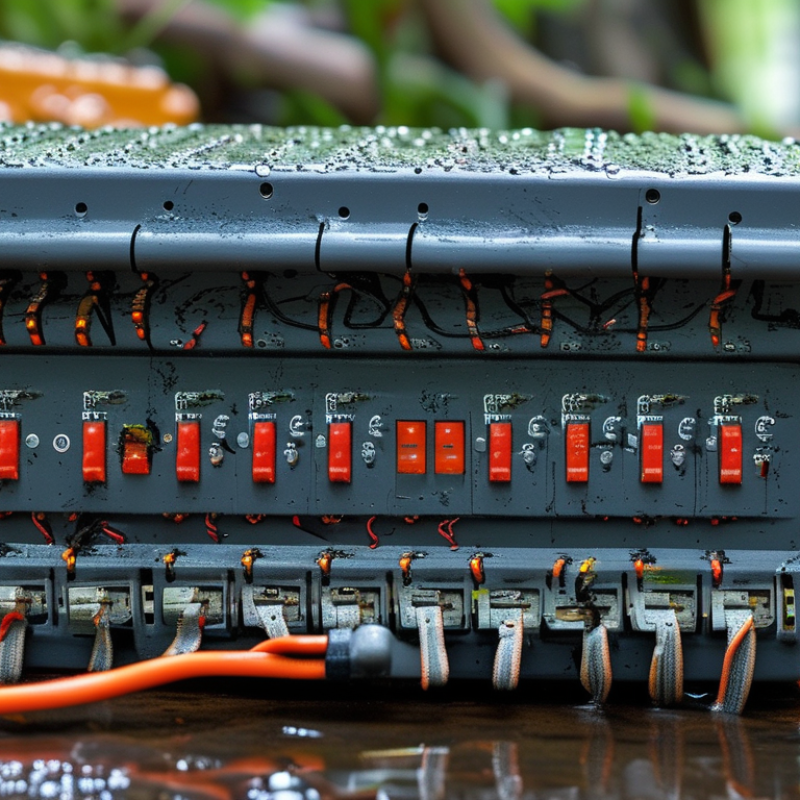
During startup, an inverter and an RCCB respond to different electrical conditions. The inverter briefly charges its internal capacitors and energizes switching circuits. This can create a short leakage-current pulse through filters, cables, or motor insulation. An RCCB detects current leaving the intended circuit path. If that imbalance exceeds its trip level, it disconnects the supply within milliseconds.
My first assumption was that every startup trip meant an inverter fault. That assumption was too simple. In field checks, moisture, long output cables, and connected motors often contribute to the leakage. An RCCB may also react when several small leakage currents combine. The inverter can be healthy, yet the total residual current remains too high.
A careful inspection begins with isolating the load and testing the inverter alone. Measure insulation resistance with suitable equipment, then reconnect each cable and motor separately. Check that the RCCB type matches the inverter’s possible residual-current waveform. Some systems produce smooth DC components or high-frequency leakage, which ordinary protection devices may not detect correctly. Never bypass the RCCB or increase its setting without a qualified electrical assessment. That shortcut can hide a dangerous insulation fault. I have also seen loose protective-earth connections cause confusing results. Recheck the terminals. Then observe startup current, leakage current, and trip timing under controlled conditions.
An inverter may trip the RCCB because startup leakage briefly exceeds its residual-current threshold. Internal filters contain capacitors connected between live conductors and protective earth. These capacitors can release a short current pulse when power begins. Long cables make the effect stronger. Moisture inside outdoor junction boxes can worsen it.
Incorrect RCCB selection is another common cause. Some inverter systems produce smooth DC residual currents or mixed-frequency leakage. A basic alternating-current device may respond unpredictably. IEC 62477-1 addresses safety requirements for power electronic systems, including protective separation and leakage-current considerations. The correct RCCB type must match the inverter’s residual-current waveform. Local electrical rules still control the final installation.
System scale matters too. IEA PVPS reported about 456 GW of new photovoltaic capacity worldwide in 2023. More installations mean more parallel filters, cables, and possible leakage paths. During inspections, technicians should isolate the inverter, test insulation resistance, and check neutral-to-earth connections. They should also measure leakage with a suitable clamp meter during startup. Never assume the inverter is defective. The first assumption is often wrong.
A loose neutral, shared neutral, or reversed connection can also trip the device. An aging RCCB may trip below its marked threshold. Testing under cold, wet conditions may reveal a fault missed during dry commissioning. Some troubleshooting steps remain easy to overlook. That deserves reflection.
An inverter that trips the RCCB at startup may have a leakage fault, not a simple overload. I have seen this happen when internal capacitors charge suddenly. Damp cables, damaged insulation, and neutral-to-earth contact can create the same symptom. My first assumption was often a failed inverter. That assumption was wrong.
Before resetting the RCCB, record exactly when it trips. Does it happen immediately, after a few seconds, or only when a load starts? Switch off the inverter and isolate connected equipment using the approved procedure. Inspect terminals, cable glands, and nearby wiring for moisture, loose strands, or heat marks. Do not touch exposed conductors. A visual check can reveal more than expected.
A qualified electrician can test insulation resistance and leakage current with suitable instruments. Testing should cover the inverter, supply cable, battery circuit, and downstream loads separately. If the RCCB holds with the loads disconnected, reconnect them one at a time. This helps identify the faulty circuit without repeated guesswork. Some inverters also have normal startup leakage, but the measured value must remain within the installation requirements. Never bypass the RCCB or fit a higher-rated device to stop nuisance trips. That can hide a dangerous fault. I have occasionally focused too much on the inverter and overlooked a damp outdoor socket. It is an easy mistake. If the trip returns after isolation, stop resetting and arrange a competent inspection.
When an inverter trips the RCCB at startup, do not reset it repeatedly. I used to blame inrush current first; that shortcut is often wrong. An RCCB normally responds to residual current, not ordinary overload. Possible causes include damaged insulation, moisture, neutral-earth contact, or filter leakage.
NFPA’s Home Fires Involving Electrical Distribution and Lighting Equipment report estimated about 45,000 related U.S. home fires annually from 2012 to 2016. It also recorded approximately 420 civilian deaths and $1.3 billion in direct property damage. The data is not inverter-specific, but it supports disciplined commissioning.
Begin by isolating the supply and checking cables, terminals, glands, and the inverter enclosure for moisture. Disconnect downstream loads, then energize the inverter alone. If the RCCB holds, reconnect each load separately. The faulty circuit may reveal itself quickly.
Small details matter. A shared neutral can cause an unexpected trip. A qualified electrician should measure insulation resistance and leakage current with suitable instruments. Never apply an insulation tester to connected electronic equipment.
Check the RCCB type, sensitivity, and installation against the inverter instructions, IEC 60364-6, and IEC 62477-1. Record whether the trip occurs instantly or after several seconds.
Instant trips often suggest leakage or wiring errors; delayed trips may indicate accumulated filter current or a deteriorating component. I would also recheck the neutral-earth arrangement, because assumptions made during installation are not always correct.
An inverter can trip the RCCB when its input capacitors charge suddenly. Internal filters may also create a short leakage pulse. The RCCB detects this imbalance between live and neutral conductors. It does not respond to normal overloads in the same way. Moisture, damaged insulation, incorrect neutral wiring, or a neutral-to-earth connection can cause repeated trips. In field troubleshooting, I check these causes before changing any protective device.
Preventive work should begin with a qualified electrical inspection. Isolate the inverter, then test cable insulation and protective-earth continuity with suitable instruments. A residual-current clamp can reveal leakage that appears only during startup. Check whether other equipment shares the same RCCB. Several small leakage currents can combine and exceed its operating threshold. Keep power and control cables separated, and tighten terminals to the manufacturer’s specified torque. Small details matter.
The RCCB must match the inverter system and local electrical requirements. Its residual-current sensitivity and operating type should be selected by a competent professional. Do not simply install a higher-rated device or bypass the protection. That approach may hide a dangerous fault. Some systems benefit from controlled precharging or a correctly designed time delay, but these changes require engineering review. I once blamed the inverter too quickly; the actual problem was moisture inside a cable junction. Inspect after rain, cleaning, and long storage. Record each trip, including load, temperature, and startup time. Patterns often reveal what a single test misses.
The inverter briefly charges internal capacitors. Filters may create a short leakage-current pulse. The RCCB detects this imbalance. Startup is the trigger.
No. Moisture, damaged insulation, long cables, or motors may cause leakage. Several small leakages can combine. I once blamed the inverter too quickly.
Stop repeated resets. Isolate the supply safely. Inspect cables, terminals, glands, and the enclosure for moisture. Small details matter.
Disconnect downstream loads, then energize the inverter alone. Reconnect each motor or cable separately. The faulty circuit may reveal itself quickly.
An instant trip may suggest leakage or wiring errors. A delayed trip may indicate accumulated filter current. It may also show a deteriorating component.
Yes. A shared neutral or neutral-to-earth connection can create current imbalance. Recheck the neutral arrangement carefully. Assumptions can be wrong.
A qualified electrician should measure insulation resistance and leakage current. Check protective-earth continuity too. Never test connected electronic equipment with an insulation tester.
Use an RCCB suitable for the inverter’s leakage waveform and sensitivity. Separate power and control cables. Tighten terminals correctly. Inspect again after rain or long storage.
No. That can hide a dangerous insulation fault. Any delay or precharging change needs professional engineering review. Safety shortcuts are poor troubleshooting.
When asking, “why does my inverter trip the rccb on startup,” it is important to understand that both devices are designed to protect the electrical system in different ways. An inverter may create a brief startup current, leakage current, or electrical imbalance as its internal components energize. If this exceeds the RCCB’s operating threshold, the RCCB disconnects the supply to reduce the risk of electric shock or insulation-related faults. Common causes include moisture, damaged cables, poor grounding, connected appliances with leakage, incorrect wiring, or an RCCB that is unsuitable for the inverter system.
Before resetting the RCCB repeatedly, switch off connected loads and inspect the installation for visible damage, loose connections, burning smells, or moisture. Follow a safe, step-by-step process: isolate the inverter, test the RCCB, reconnect circuits one at a time, and observe when the trip occurs. If the fault continues, qualified electrical testing may be needed to check insulation resistance, grounding, and inverter compatibility. Regular maintenance, dry connections, correct protection settings, and balanced loads can help prevent repeated trips and improve overall system safety.
