 Bowser Electric
Choosing the right protection device can prevent electric shock, overheating, and avoidable household damage. Yet many homeowners still ask, “how to choose between rccb and rcbo for home?” The answer depends on circuit design, appliance demand, available space, and local electrical requirements in China.
An RCCB detects leakage current and disconnects a circuit when electricity flows through an unintended path. However, it does not normally provide overload or short-circuit protection. A separate circuit breaker is therefore required. An RCBO combines leakage protection with overcurrent protection in one device. This can suit individual circuits, such as a bathroom water heater, kitchen sockets, or an air-conditioner supply.
In real installations, an electrician may use RCBOs to limit disruption. A fault in one bedroom circuit should not necessarily turn off the refrigerator or lighting. RCCBs can still be practical when several circuits share coordinated overcurrent protection. Space inside the distribution board also matters. RCBOs often need more room, depending on their design.
There is no universal “best” choice. That sounds simple, but it is often overlooked. Product quality, rated current, residual operating current, pole configuration, and compatibility with the consumer unit deserve careful checking. Select equipment from a traceable manufacturer, and verify applicable IEC or Chinese standards with a qualified professional. Installation errors can defeat good protection. Even experienced installers should recheck neutral connections, testing buttons, and circuit labeling before energizing the board.
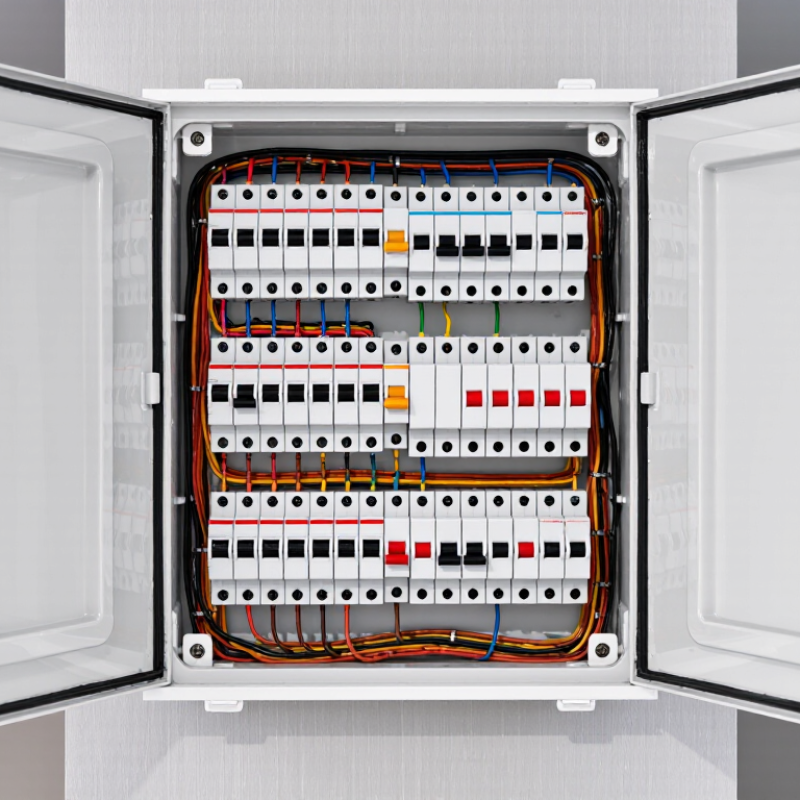
RCCB and RCBO Mean in Home Electrical Protection
RCCB means Residual Current Circuit Breaker. It monitors current flowing through the live and neutral wires. If some current leaks toward earth, it disconnects the circuit quickly. This helps reduce electric shock and fire risks caused by insulation damage or moisture. However, an RCCB does not normally protect against overloads or short circuits. It therefore needs a suitable circuit breaker or fuse.
RCBO means Residual Current Breaker with Overcurrent protection. It combines earth-leakage protection with overload and short-circuit protection in one device. A useful detail appears during a fault: an RCBO can protect one individual circuit, such as a water heater or kitchen socket line. Other household circuits may continue working. An RCCB may disconnect several circuits together, which can make fault finding slower.
The better choice depends on the distribution board, circuit design, and local electrical requirements in China. Check the rated current, breaking capacity, residual operating current, pole arrangement, and RCD type. A 30 mA sensitivity is commonly used for additional personal protection, but the installation must follow applicable standards. Test the device with its test button at the interval required by the manufacturer or local rules. Do not assume a successful test proves every wiring detail is safe. That is an easy mistake. A qualified electrician should verify earthing, neutral separation, conductor size, and coordination between protective devices.
| Comparison Dimension | RCCB | RCBO | Practical Home Selection Guidance |
|---|---|---|---|
| Meaning | Residual Current Circuit-Breaker. It disconnects a circuit when it detects an imbalance between live and neutral current. | Residual Current Breaker with Overcurrent protection. It combines residual-current protection with overload and short-circuit protection. | Both devices provide earth-leakage protection; only an RCBO normally combines this with circuit overcurrent protection. |
| Main protection provided | Protection against electric shock risk from residual current and protection against some earth-leakage faults. | Residual-current protection, overload protection, and short-circuit protection in one device. | RCBO offers broader individual-circuit protection |
| Overload protection | No. A separate miniature circuit-breaker or fuse is required for overload and short-circuit protection. | Yes. The rated current and trip curve must be selected to suit the cable and connected load. | An RCCB must not be used as the only protective device for a final circuit. |
| Typical installation position | Often installed upstream of several miniature circuit-breakers to protect a group of circuits. | Usually installed on an individual final circuit, such as sockets, kitchen appliances, water heaters, or outdoor equipment. | Use an RCBO where circuit-by-circuit protection and fault isolation are priorities. |
| Effect of a fault | A residual-current fault can disconnect multiple downstream circuits at the same time. | A fault normally disconnects only the circuit protected by that RCBO. | RCBOs can reduce unnecessary loss of power to unrelated rooms and appliances. |
| Space and wiring | Usually requires an RCCB plus separate circuit breakers, which can use more distribution-board space and wiring. | Combines functions in one protective device, although the exact width depends on the design and pole arrangement. | Check the distribution-board layout, neutral arrangement, and device dimensions before installation. |
| Common pole arrangements | Two-pole devices are common for single-phase circuits; four-pole devices are used for three-phase systems. | Single-pole-plus-neutral and two-pole versions are common for single-phase final circuits; multi-pole versions are available for other systems. | The pole arrangement must match the supply system and local wiring rules. |
| Typical residual-current rating | 30 mA is commonly used for additional protection of socket-outlet and similar final circuits. Higher ratings such as 100 mA or 300 mA may be used for upstream or fire-protection purposes. | 30 mA is commonly selected for additional protection of household final circuits; higher ratings may be used where the design requires them. | A 30 mA device is not a substitute for proper earthing, bonding, insulation, or safe working practices. |
| Residual-current type | Type AC detects sinusoidal alternating residual current. Type A also detects pulsating direct residual current. | Type AC or Type A may be available; the correct type depends on the connected equipment and installation requirements. | Type A is often more suitable for modern electronic loads, but the required type should be confirmed by the circuit design. |
| Typical rated current range | Common household products are available in ratings such as 25 A, 40 A, and 63 A, but the available range varies by product and system. | Common final-circuit ratings include 6 A, 10 A, 16 A, 20 A, 25 A, and 32 A, with other ratings also available. | Select the rating according to cable capacity, expected load, installation method, and coordination with upstream protection. |
| Short-circuit breaking capacity | An RCCB normally does not provide short-circuit interruption by itself; the upstream protective device must provide it. | RCBOs have a specified short-circuit breaking capacity, commonly marked in kA, such as 6 kA or 10 kA depending on the product and installation. | The breaking capacity must be equal to or greater than the prospective short-circuit current at the installation point. |
| Nuisance tripping considerations | Leakage from several downstream circuits can add together and cause group tripping. | Leakage is isolated by circuit, but electronic equipment and cumulative leakage can still cause unwanted trips. | Investigate insulation, neutral-earth faults, equipment leakage, and circuit loading rather than simply increasing the trip rating. |
| Cost and maintenance | The device cost may be lower per protected group, but separate circuit breakers and fault tracing may be required. | The device cost is often higher per circuit, but fault isolation and circuit-level maintenance can be simpler. | Compare total installation cost, available panel space, reliability, and the importance of keeping other circuits energized. |
| Best-fit applications | Suitable for grouped circuits where simultaneous disconnection is acceptable and separate overcurrent breakers are correctly coordinated. | Suitable for individual circuits requiring independent residual-current, overload, and short-circuit protection. | RCBO is generally the more flexible choice for new individual home circuits |
| Standards and verification | Relevant product requirements are commonly associated with IEC 61008-1 and applicable national standards. | Relevant product requirements are commonly associated with IEC 61009-1 and applicable national standards. | For installations in China, verify the current applicable GB or GB/T requirements and have the selection checked by a qualified electrician. |
| Testing and safe use | The test button should be operated at the interval recommended by the manufacturer or local rules. | The test button should also be operated at the recommended interval, and trips should be investigated before resetting repeatedly. | Do not bypass, replace, or repeatedly reset a protective device without finding the cause of the fault. |
RCCB means Residual Current Circuit Breaker. It detects current leaking toward earth and disconnects the circuit quickly. It can reduce shock and fire risks.
Normally, no. An RCCB needs a suitable circuit breaker or fuse for overload and short-circuit protection. This detail is easy to miss.
RCBO means Residual Current Breaker with Overcurrent protection. It combines leakage, overload, and short-circuit protection in one device.
An RCBO can protect one circuit, such as a water heater or kitchen socket line. If that circuit trips, other circuits may continue working. Small choice, big difference.
Yes. One RCCB may protect several circuits. A small leakage fault can then switch off much of the home. Fault finding may take longer.
An RCCB with separate circuit breakers often costs less initially. However, it may need more panel space and careful coordination. Cheap is not always cheaper later.
Check rated current, breaking capacity, residual operating current, pole arrangement, and RCD type. Installation must follow applicable local requirements. A simple list can still miss wiring problems.
Press the test button according to manufacturer instructions or local rules. Check for loose connections, heat marks, moisture, damaged insulation, and repeated trips. Never ignore frequent tripping. A qualified electrician should verify earthing, neutral separation, conductor size, and device coordination. A successful test does not prove every wiring detail is safe.
Choosing the right device for residential electrical protection requires understanding the difference between an RCCB and an RCBO. An RCCB detects residual current leakage and disconnects the circuit to help prevent electric shock and fire, but it normally needs a separate overcurrent protective device. An RCBO combines residual-current protection with overload and short-circuit protection in one unit, offering more targeted protection for individual circuits. Therefore, how to choose between rccb and rcbo for home depends on the home’s wiring design, circuit layout, available installation space, protection requirements, and budget.
In China, homeowners should also consider compatibility with the distribution board, rated current, sensitivity, pole configuration, neutral wiring, and local electrical installation standards. RCCBs may be more economical for protecting several circuits together, while RCBOs can limit disruption because a fault on one circuit does not necessarily disconnect the entire home. Proper installation, testing, and regular maintenance are essential in either case. A qualified electrician should assess the household load and select suitable protection rather than relying on price alone.
