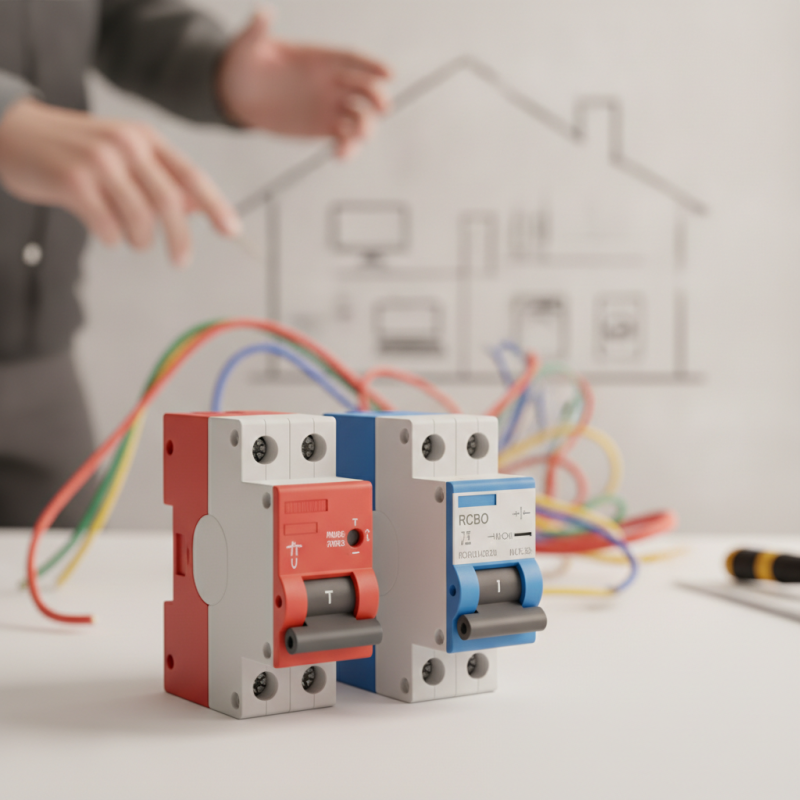
Choosing the right electrical safety devices for your home is crucial. Many homeowners face confusion when determining how to choose between RCCB and RCBO for home safety. Industry expert John Smith emphasizes, “Understanding the differences can save lives.” This statement highlights the importance of making an informed decision.
RCCB, or Residual Current Circuit Breaker, focuses on protecting from earth faults. On the other hand, RCBO combines the functions of MCB and RCCB. Both devices offer essential safety features. However, the choice depends on your specific needs. In a standard household, the considerations can be complex.
It’s vital to assess your home’s wiring and appliances. Do you have sensitive electronics? An RCBO might be more suitable. A clear understanding of each device’s function can enhance safety. Reflect on your living conditions and potential risks. Making a thoughtful choice is key to ensuring home safety.
Understanding RCCB and RCBO: Definitions and Functions
When it comes to home safety, understanding the difference between RCCB and RCBO is essential. An RCCB, or Residual Current Circuit Breaker, protects against earth faults. It detects leakage currents and disconnects the power supply. This is crucial in preventing electric shocks. However, it does not offer overcurrent protection, leaving your circuits vulnerable to overloads.
On the other hand, an RCBO, or Residual Current Circuit Breaker with Overcurrent, combines the functions of both RCCB and MCB. It not only protects against earth faults but also safeguards against overload and short circuits. This dual function can be a better choice for many households. Choosing between the two requires assessment of your needs.
Consider your electrical system's complexity. Smaller homes may manage with an RCCB, while larger properties might need the enhanced protection of an RCBO. Each option has its merits, and understanding them is key to making an informed decision. Reflecting on your household's electrical demands could reveal surprising insights into safety needs. Are you truly protected?
Comparison of RCCB and RCBO Ratings for Home Safety
Key Differences Between RCCB and RCBO in Electrical Safety
When considering home safety, understanding RCCB (Residual Current Circuit Breaker) and RCBO (Residual Current Circuit Breaker with Overcurrent Protection) is crucial. Both devices play vital roles in preventing electrical hazards. However, they differ significantly in function and application, making it essential to choose the right one for your needs.
RCCB focuses solely on protecting against earth faults. It detects imbalances in the electrical current and can cut the power supply quickly. According to the Electrical Safety Foundation International, RCCBs can prevent approximately 30% of electrical shock incidents. On the other hand, RCBO combines the protection of an RCCB with that of a circuit breaker. It protects against both earth faults and overcurrent, offering a more comprehensive safety solution. For homeowners, this dual protection can be invaluable, as studies indicate that overcurrent can lead to house fires in 50% of electrical safety incidents.
Choosing between these devices depends on your specific needs. If your home has appliances that frequently draw high current or if you face overloading risks, RCBO may be the better option. However, if you are in a low-risk environment, RCCB might suffice. Evaluating your electrical needs carefully is vital. An unconsidered choice could leave your home vulnerable to preventable risks.
How to Choose Between RCCB and RCBO for Home Safety?
| Feature |
RCCB (Residual Current Circuit Breaker) |
RCBO (Residual Current Breaker with Overload Protection) |
| Functionality |
Detects earth faults and disconnects supply |
Detects earth faults and overloads, disconnecting supply |
| Protection Type |
Only earth leakage protection |
Earth leakage and overload protection |
| Usage |
Mainly used in residential buildings |
Suitable for both residential and commercial installations |
| Cost |
Generally lower cost |
Higher cost due to additional protective features |
| Installation |
Easier to install |
May require more thorough installation planning |
| Common Applications |
For protecting circuits in homes |
For protecting individual outlets or devices |
Factors to Consider When Choosing RCCB or RCBO for Your Home
When choosing between an RCCB (Residual Current Circuit Breaker) and an RCBO (Residual Current Breaker with Overcurrent protection) for home safety, it's essential to consider several key factors. RCCBs primarily protect against earth faults, while RCBOs combine this feature with overcurrent protection from short circuits or overloads. This makes an RCBO a versatile option, especially in homes with varying electrical loads.
Evaluate your home’s electrical needs. If you have several circuits requiring protection, an RCCB may suffice. However, for appliances with higher current draws, like air conditioners, an RCBO might be more suitable. It’s also crucial to assess the size of your home and its wiring layout. In larger homes, having multiple RCBOs could enhance safety and prevent nuisance tripping.
Cost is a practical consideration. While RCBOs offer more protection, they are often pricier than RCCBs. Balancing safety and budget is vital. Reflect on how much you rely on specific appliances and their impact on safety. Understanding these nuances will guide your decision, ensuring it aligns with your home’s unique requirements.
Installation Requirements for RCCB and RCBO Explained
When considering home safety, choosing between RCCBs and RCBOs is crucial. Understanding the installation requirements for these devices is essential. RCCBs protect against earth faults, while RCBOs offer overcurrent protection in addition to earth fault protection. Both devices should be installed according to the latest IET Wiring Regulations, which specify certain installation guidelines to ensure safety and functionality.
Installation requires careful planning. The location of the RCCB or RCBO is vital. They should be placed in accessible areas for maintenance and checks. According to a report from the Electrical Safety Council, 40% of electrical accidents are due to improper installation. Adequate wiring needs to be verified before implementation. Using the correct cable sizes can prevent breakdowns.
Regular testing is also necessary post-installation. Experts recommend testing RCCBs and RCBOs every six months. The devices have a test button, which should be used to ensure they function correctly. Failure to regularly check these devices may lead to undetected faults. Neglecting these guidelines can compromise home safety significantly.
Common Applications and Scenarios for RCCB and RCBO Use
When considering home electrical safety, understanding the distinct applications of RCCBs and RCBOs is crucial. RCCBs, or Residual Current Circuit Breakers, are often used to protect against earth faults. They disconnect the circuit when they detect an imbalance between the live and neutral currents. In contrast, RCBOs, or Residual Current Breaker with Overcurrent Protection, combine the functions of both an RCCB and a circuit breaker. They provide protection against earth faults as well as overload and short circuits, offering a more comprehensive solution for home safety.
Common scenarios for using RCCBs include protecting circuits in wet areas like bathrooms and kitchens, where the risk of electric shock is higher. According to a report by the Electrical Safety Foundation International, approximately 70% of electrical shocks occur in these regions. On the other hand, RCBOs are preferred in circuits with multiple appliances, such as living rooms or home offices. Their dual functionality is beneficial in areas with fluctuating loads. The need for a higher level of protection is evident, especially in homes with children or elderly residents, as reported by the National Fire Protection Association, which highlights that about 32% of home electrical fires are caused by faulty wiring or overloaded circuits.
Choosing between RCCBs and RCBOs depends on the specific needs of your home. While RCCBs are cost-effective for basic protection, RCBOs may offer better long-term safety despite the higher initial investment. Homes with high power consumption should consider RCBOs to mitigate risks. Disconnecting a circuit manually during maintenance can be a critical time when safety measures must be prioritized. Each option requires careful assessment to ensure maximum protection.
Conclusion
When deciding how to choose between RCCB and RCBO for home safety, it's essential to understand their definitions and functions. RCCB (Residual Current Circuit Breaker) detects earth faults, while RCBO (Residual Current Breaker with Overcurrent Protection) combines earth fault protection with overcurrent protection. The key differences in their roles significantly impact electrical safety in residential settings.
Factors to consider include the specific electrical needs of your home, the level of protection required, and the complexity of installation. Both RCCB and RCBO serve various applications, making it crucial to assess your home’s electrical systems. By understanding these aspects, homeowners can make informed decisions to enhance safety effectively.
 Bowser Electric