Bowser Electric Bowser Electric

China Top 10 MCB Brands How to Tell If an MCB Is Burnt?

Time:2026-09-10 Author:Oliver
0%

Choosing a reliable miniature circuit breaker matters when safety, equipment protection, and consistent performance are essential. China’s electrical market includes many established MCB manufacturers, but product quality can differ across models, factories, and certification levels. This guide introduces China’s top 10 MCB brands and explains practical ways to compare their design, ratings, testing records, and field reputation.

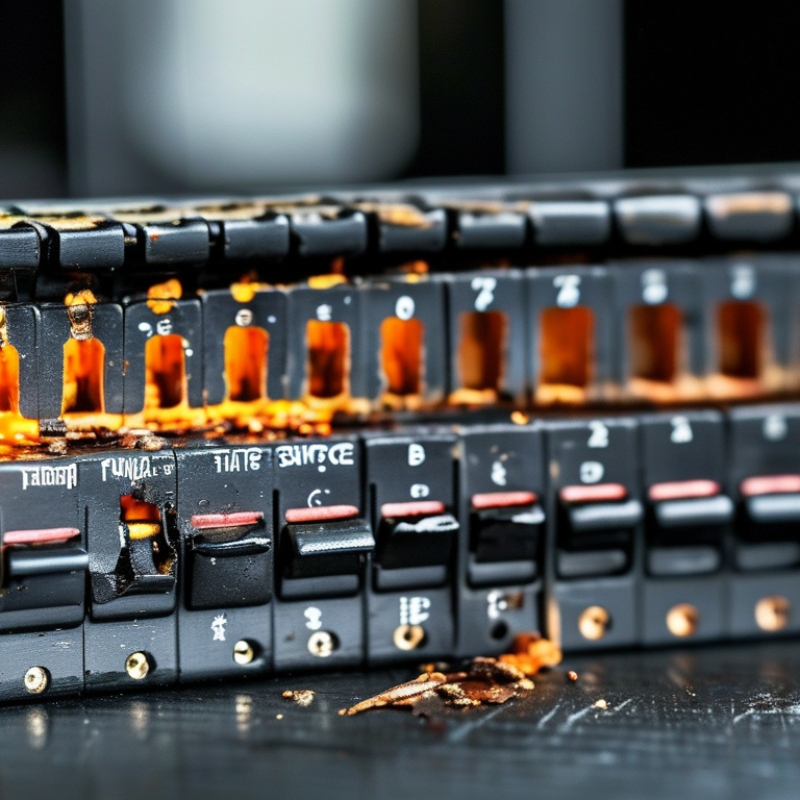
A tripped MCB does not always indicate permanent damage. Sometimes, it responds correctly to overload or a short circuit. Look for a darkened casing, melted plastic, a burnt smell, loose terminals, or visible heat marks near the connection points. The keyword how to tell if an mcb is burnt or broken reflects a common maintenance concern, especially after repeated trips or an electrical fault. The toggle may feel unusually loose. It may also fail to reset.

Do not rely on appearance alone. A breaker can look normal while its internal contacts or trip mechanism has weakened. Qualified technicians should isolate the circuit and test continuity, insulation conditions, terminal tightness, and trip performance with suitable instruments. Brand reputation helps, but it is not proof of every product’s reliability. That deserves careful thought. The comparison considers manufacturing experience, applicable IEC or GB standards, quality control, technical support, and user feedback. It also recognizes an important limitation: rankings can change as product lines, certifications, and market evidence develop. This balanced approach can help buyers choose safer MCBs and identify warning signs before a small electrical problem becomes serious.
China Top 10 MCB Brands How to Tell If an MCB Is Burnt?

What Is an MCB and Why Does Its Condition Matter?

A miniature circuit breaker, or MCB, is a protective switch in a low-voltage electrical panel. It disconnects a circuit when current becomes dangerously high. Its thermal mechanism responds to prolonged overloads, while its magnetic mechanism reacts quickly to short circuits.

Its condition matters because an MCB may protect wiring, appliances, and people from escalating electrical faults. During inspections, technicians look for a burnt-plastic smell, brown or black discoloration, melted edges, loose terminals, or unusual buzzing. Repeated tripping also deserves attention. However, a dark mark alone does not prove burning. Dust, heat, or poor lighting can mislead an inexperienced observer.

A genuinely burnt MCB often shows heat damage near a terminal or a distorted casing. The connected wire may also appear brittle or discolored. Do not keep resetting it. That can worsen a loose connection or hidden short circuit. Power should be isolated according to local safety procedures, and a qualified electrician should inspect the circuit with suitable test equipment. The MCB rating must match the conductor size and circuit design, not merely the appliance load. This detail is often overlooked. A visual check is useful, but it cannot confirm internal contact damage. Replacement may be necessary even when the lever still operates normally.

China’s Top 10 MCB Brands and Their Key Differences

China’s top ten MCB brands differ mainly in testing depth, product range, and manufacturing consistency. Some focus on residential circuits, while others serve factories, data rooms, and solar installations. Their breakers may offer one to four poles, with rated currents commonly from 1A to 63A. Breaking capacity also varies, often from 4.5kA to 10kA or higher. Check the label carefully.

Trip curves create another clear difference. Type B reacts faster to lower fault currents and suits lighting or domestic loads. Type C tolerates moderate startup current from pumps and small motors. Type D handles stronger inrush, but it needs suitable circuit calculations. Better manufacturers publish test data, temperature limits, wiring torque, and certification details. Cheaper products may look identical, yet their terminal pressure and internal contact materials can differ.

Watch for heat marks.

During inspections, I look for melted plastic, a darkened terminal, a burnt smell, or a lever that feels loose. These signs can indicate overload, loose wiring, repeated faults, or an undersized breaker. A common mistake is replacing the MCB without checking the cable and load. I have seen a new breaker discolor again within days. That result is frustrating, but useful. Compare factory test reports, sample performance, warranty response, and batch consistency before choosing among China’s leading ten manufacturers. Never rely on appearance alone.

How to Identify Visible Signs of a Burnt MCB

China Top 10 MCB Brands: How to Tell If an MCB Is Burnt?

A burnt miniature circuit breaker (MCB) often shows clear physical changes. Inspect the front cover, toggle, and terminal area for brown marks, black soot, or melted plastic. A warped toggle may feel loose or fail to stay in position. The smell can resemble burnt insulation. Small cracks matter too.

A dark mark is a clue, not proof. Dust can also look like soot. However, discoloration near a terminal often indicates overheating from a loose connection, excessive load, or repeated tripping. The IEC 60898-1 standard defines MCB performance and operating limits, but it does not make damaged plastic safe. ESFI’s analysis of U.S. Bureau of Labor Statistics data recorded 126 workplace electrical fatalities in 2020. That figure supports careful isolation and inspection.

Tips: Switch off the upstream supply and ask a qualified electrician to verify that the circuit is de-energized. Do not touch exposed terminals. Do not repeatedly reset a hot, buzzing, or burnt MCB. Photograph the discoloration before replacement. Check for heat marks on nearby wiring and the distribution-board enclosure. A replacement MCB with the wrong rating can create another failure. I have seen clean-looking breakers hide overheated terminals, so appearance alone is imperfect. Testing should include torque checks, insulation assessment, and load verification, following local electrical requirements.

How to Test an MCB Safely Before Replacing It

An MCB may look burnt, but dark marks do not always prove internal failure. Heat can come from a loose terminal, overload, or poor contact. A repeated trip may indicate a downstream fault instead.

Safety comes before diagnosis. Turn off the main supply, isolate the circuit, and prevent accidental re-energizing. A qualified electrician should verify isolation with a properly rated voltage tester. Test both the line and load terminals. Never trust a switch position alone. Confirm zero voltage.

Then inspect the MCB closely. Look for melted plastic, a sharp burnt smell, cracked insulation, or discolored terminals. With power completely disconnected, a multimeter can check continuity across the MCB. The device should show continuity when switched on and no continuity when switched off. Do not measure resistance on a live circuit. That mistake can damage the meter and injure the user.

If the MCB trips immediately after resetting, stop testing. Unplug connected loads and check for moisture, damaged cables, or a short circuit. A healthy MCB can trip correctly. Replacing it without finding the cause may repeat the failure. One practical detail is often missed: loose terminal screws can create heat even when the circuit load seems normal. I would not rely on appearance alone. Proper test results matter more than guesswork.

China Top 10 MCB Brands: How to Tell If an MCB Is Burnt? – How to Test an MCB Safely Before Replacing It

Safety notice: MCB inspection and testing must be performed by a competent person. Isolate the circuit, lock out the supply where possible, and verify the absence of voltage with a properly rated tester before touching or removing the device. Never use a continuity or resistance function on an energized circuit.
Inspection Dimension What to Check Normal Indication Possible Burnt or Damaged Indication Safe Next Action
External appearance Inspect the front, sides, terminals, and surrounding enclosure after isolation. Clean casing with no deformation, cracks, or discoloration. Melted plastic, blistering, cracks, heavy browning, or soot marks. Do not re-energize. Have the MCB and any heat-damaged wiring inspected and replaced by a qualified electrician.
Burning smell Check for a persistent burnt-plastic or electrical odor near the distribution board. No unusual odor. Persistent smell, especially with discoloration or warmth. Switch off the supply if safe to do so and arrange an urgent professional inspection.
Excessive heat After the circuit has been operating under normal load, compare temperature with adjacent similar devices without touching exposed live parts. Slight warmth may occur under load; no localized hot spot. One MCB is noticeably hotter than comparable devices, or shows heat damage. De-energize and investigate loose terminals, overload, conductor size, and contact damage. Do not simply fit a higher-rated MCB.
Lever operation With the circuit isolated, move the operating lever from OFF to ON and back to OFF. Firm, clear movement with a definite ON/OFF position. Lever is loose, stuck, cracked, unusually soft, or will not remain ON when the circuit is correctly unloaded. Do not force the lever. Disconnect the circuit and arrange replacement and fault diagnosis.
Repeated tripping Note whether the MCB trips immediately, after several minutes, or only when a particular appliance is used. The MCB remains ON when the circuit load is within its design limits and no fault is present. Frequent tripping may indicate overload, short circuit, earth fault, wiring damage, or a faulty MCB; it does not by itself prove burning. Unplug or switch off loads, do not repeatedly reset the device, and have the circuit tested professionally.
Supply voltage check A qualified person checks voltage at the MCB supply and load terminals using a correctly rated two-pole voltage tester. Voltage is present at the supply terminal and is switched to the load terminal when the MCB is ON. Correct supply is present but the expected load-side voltage is absent with the MCB ON, suggesting an open or damaged contact. This is a live electrical test. Only a competent person should perform it; isolate the circuit before any removal.
Dead-circuit continuity check After isolation, lockout, and proving dead, disconnect the circuit conductors if required and measure across the MCB terminals. ON position shows low resistance or continuity; OFF position shows open circuit. ON position remains open circuit, or OFF position shows unexpected continuity. Replace the MCB with the correct type and rating after identifying the cause of damage.
Terminal condition Inspect for loose strands, damaged insulation, oxidation, arcing marks, or an overheated terminal screw. Conductor is correctly sized, fully inserted, secure, and free from heat marks. Darkened copper, melted insulation, pitting, loose connection, or signs of arcing. Do not reuse damaged conductors or terminals. Repair the connection and replace damaged components.
Load and rating review Compare the MCB rating with the circuit design, conductor capacity, installation method, and connected load. The protective-device rating is suitable for the circuit and cable under applicable electrical rules. Oversized protection, sustained overload, or a circuit used beyond its intended purpose. Never increase the rating to stop nuisance tripping without a design assessment.
Replacement decision Confirm the fault cause, pole configuration, rated current, voltage, tripping characteristic, interrupting capacity, and enclosure compatibility. Replacement matches the original circuit design and applicable local requirements. A replacement is selected only by appearance or by a higher current rating. Use a compatible, certified device and test the installation after replacement.
Important distinction: An MCB protects against overcurrent and short circuits. It is not the same as an RCD or RCBO, which provides residual-current protection. An MCB normally has no user-operated test button; never rely on an RCD/RCBO test procedure to assess a standard MCB.

How to Choose and Install a Reliable Replacement MCB

A burnt MCB may show brown plastic, a sharp odor, melted terminals, or a loose toggle. Do not reset it repeatedly. The fault may remain inside the wiring. NFPA’s analysis of United States home fires from 2016–2020 recorded about 32,620 fires involving electrical distribution and lighting equipment. These incidents caused approximately 470 deaths, 1,100 injuries, and 1.3 billion dollars in property damage. That figure makes replacement selection a safety decision, not a cosmetic repair.

Choose an MCB with the same rated current, voltage, number of poles, and suitable tripping curve. Curve B often suits low inrush domestic loads, while Curve C handles moderate motor or transformer starting currents. Curve D needs careful engineering. Check the required short-circuit breaking capacity and confirm compliance with IEC 60898-1 or the applicable national standard. The replacement must also fit the distribution board’s busbar and terminal arrangement. A higher ampere rating is not a safe upgrade.

Installation should begin with isolation and a verified dead circuit. Use a calibrated voltage tester, not only the switch position. Inspect the cable insulation, terminal heat marks, and enclosure before fitting the new device. Tighten terminals to the specified torque. Loose connections create heat. A licensed electrician should test continuity, insulation resistance, polarity, and trip operation after installation. I still recheck every terminal, because a clean-looking MCB can hide a damaged conductor. A label alone is never enough.

China Top 10 MCB Brands: How to Identify a Burnt MCB and Choose a Reliable Replacement

The chart shows commonly manufactured miniature circuit-breaker rated currents used in low-voltage residential and commercial circuits. A replacement MCB must match the original rated current, pole configuration, voltage rating, frequency, and trip curve. Before replacement, inspect for blackening, melted plastic, a burnt smell, loose terminals, abnormal heat, or repeated nuisance tripping. Always isolate the supply and have installation verified by a qualified electrician.

FAQS

: What mainly differentiates MCB manufacturers?

: Key differences include testing depth, product range, manufacturing consistency, and technical documentation. Appearance can mislead.

Which rated currents and pole options are common?

Common ratings range from 1A to 63A. Units may have one to four poles.

What do Type B, Type C, and Type D curves mean?

Type B suits lighting and domestic loads. Type C handles pumps and small motors. Type D manages stronger startup currents.

What should buyers check on the product label?

Check rated current, pole count, breaking capacity, trip curve, temperature limits, and certification details. Read carefully.

What heat damage signs require attention?

Look for melted plastic, dark terminals, burnt smells, or loose levers. These signs may indicate overload or loose wiring.

Should a burnt-looking MCB always be replaced?

No. Dark marks may result from loose terminals, overload, or poor contact. Test the circuit before replacing anything.

How can an MCB be tested safely?

Turn off the main supply and isolate the circuit. Prevent accidental re-energizing. Verify zero voltage on line and load terminals.

What can a multimeter check?

With power disconnected, check continuity. The MCB should conduct when switched on and stop conducting when switched off.

What should happen after an immediate trip?

Stop testing and unplug connected loads. Check for moisture, damaged cables, and short circuits. A healthy MCB may trip correctly.

What mistake can cause repeated MCB failure?

Replacing the breaker without checking cables, terminals, and connected loads may repeat the problem. I once overlooked that.

Conclusion

This guide explains what a miniature circuit breaker (MCB) does and why its condition is important for electrical safety, equipment protection, and reliable power distribution. It compares the main differences among China’s leading MCB manufacturers without focusing on brand names, including product quality, trip characteristics, rated capacity, certification, materials, and application suitability. It also provides practical guidance on how to tell if an mcb is burnt or broken by checking for discoloration, melting, burning odors, unusual heat, loose terminals, repeated tripping, or a lever that cannot remain in position.

The article then describes safe testing steps before replacement, such as switching off the power, inspecting the circuit, and using suitable test equipment when qualified to do so. Finally, it explains how to choose a dependable replacement based on voltage, current rating, pole configuration, trip curve, breaking capacity, and installation requirements. Correct wiring, secure connections, and professional assistance are emphasized to reduce hazards and ensure the new MCB operates properly.

Oliver

Oliver

Oliver is a seasoned marketing professional with a wealth of expertise in driving brand awareness and engagement. With a deep understanding of our company's product offerings, he consistently delivers high-quality content that enriches our professional blog. His insights not only shed light on......